You probably noticed it gradually. A slight softening along the jawline. Fine lines that were not there last summer. Skin that once snapped back after a long weekend now takes a little longer to recover. These are not signs of neglect — they are signs of a biological process that begins quietly in your late twenties and accelerates with every decade that follows.
Collagen loss is one of the most significant drivers of visible skin aging. Yet for most people, the understanding of what collagen actually does, why it declines, and what can meaningfully slow or reverse that process remains surprisingly shallow. Marketing messages promise instant results. Social media filters normalize unrealistic standards. And clinics that once focused exclusively on adding volume are now having a very different conversation — one centered on skin quality, regeneration, and long-term skin health.
At Natural Beauty Clinic in White Rock, BC, Dr. Belinda Capera approaches skin health through the lens of integrative and functional medicine. That means looking beyond the surface. It means asking why collagen is declining in the first place — and addressing those root causes alongside evidence-informed aesthetic treatments.
This article explores the science of collagen loss, the factors that accelerate it (especially during summer), and the regenerative strategies that are reshaping modern aesthetic medicine across Greater Vancouver and beyond.

1. What Is Collagen and Why Does It Matter?
Collagen is the most abundant structural protein in the human body, making up approximately 75–80% of the dry weight of healthy skin. Think of it as the scaffolding that keeps your skin firm, smooth, and resilient. It works alongside elastin — which gives skin its ability to spring back — and hyaluronic acid, which binds moisture within the skin’s layers.
Within the skin, collagen is primarily found in the dermis, the middle layer beneath the outer epidermis. It is produced by specialized cells called fibroblasts, which respond to a variety of signals — both internal (hormones, nutrients, inflammatory markers) and external (UV radiation, mechanical stimulation, aesthetic treatments).
When collagen is abundant and well-organized, skin appears:
- Firm and lifted
- Smooth in texture
- Hydrated and plump
- Resilient and radiant
When collagen is depleted or fragmented, the structural integrity of the dermis is compromised. The result is visible in the form of fine lines, wrinkles, skin laxity, uneven texture, enlarged pores, and a general loss of luminosity.
Understanding collagen also means understanding what damages it — because rebuilding it begins with removing what is breaking it down.
2. When Does Collagen Loss Begin?
The decline of collagen is not sudden. It is a gradual process that begins earlier than most people expect.
Research indicates that fibroblast activity — the cellular engine of collagen production — begins to slow in the mid-twenties. By the time most individuals reach 30, the body is producing measurably less collagen than it was a decade earlier. From that point, production continues to decline by approximately 1% per year under normal circumstances.
The impact of this decline becomes visually apparent in the thirties for many people, and accelerates noticeably during perimenopause and menopause, when estrogen levels drop significantly. Estrogen plays a direct role in stimulating fibroblasts, maintaining skin hydration, and preserving collagen density. Its decline compounds the age-related reduction in production with a hormonal shift that affects skin quality, elasticity, and moisture retention simultaneously.
The important takeaway: collagen loss is not something that happens to you suddenly at a certain age. It is a continuous, cumulative process influenced by biology, lifestyle, hormones, environment, and cellular health. Which means it is also something that can be meaningfully addressed — at every stage.
3. Five Key Factors That Accelerate Collagen Decline
While aging is inevitable, the rate at which collagen declines is significantly influenced by modifiable factors. Understanding these accelerators is essential to any meaningful skin health strategy.
Chronic UV Exposure
Ultraviolet radiation is one of the most potent destroyers of collagen in the skin. UV-A rays penetrate deeply into the dermis and trigger the production of enzymes called matrix metalloproteinases (MMPs), which actively break down collagen and elastin fibers. Cumulative sun exposure — even incidental daily exposure without protection — contributes to what researchers call photoaging: premature collagen degradation, loss of skin density, hyperpigmentation, and vascular changes.
In the Greater Vancouver area, summer brings increased UV index readings, longer daylight hours, and significantly more time spent outdoors — all of which translate to greater cumulative UV exposure for skin that may already be in a state of collagen deficit.
Chronic Inflammation
Inflammation is a normal and necessary immune response. But when it becomes chronic — driven by poor diet, stress, environmental toxins, gut dysbiosis, or unmanaged health conditions — it creates a systemic environment that actively degrades collagen. This low-grade, persistent inflammatory state produces free radicals and inflammatory cytokines that damage collagen fibers, impair fibroblast function, and accelerate visible skin aging.
From an integrative medicine perspective, addressing chronic inflammation is not simply a cosmetic concern — it is a foundational element of whole-body health.
Hormonal Shifts
As estrogen levels decline — whether gradually with age or more rapidly during perimenopause — the skin loses one of its most important structural supports. Estrogen receptors are found throughout the skin, and estrogen’s influence on collagen synthesis, skin hydration, and barrier function is well-documented in the scientific literature. Women may notice changes in skin texture, moisture, and firmness beginning in their forties, often accelerating in the years surrounding menopause.
At Natural Beauty Clinic, Dr. Capera integrates naturopathic hormonal assessment into skin health consultations, recognizing that skin changes are often reflective of deeper hormonal patterns.
Nutritional Deficiencies
Collagen synthesis is a biochemical process that requires specific nutritional cofactors. Vitamin C is essential for the hydroxylation of proline and lysine — two amino acids that form the collagen triple helix structure. Zinc is required for fibroblast function and wound repair. Adequate dietary protein provides the amino acid building blocks (particularly glycine, proline, and hydroxyproline) that the body uses to construct collagen.
Deficiencies in any of these nutrients — which are surprisingly common, particularly in individuals following restrictive diets or experiencing high physiological stress — can meaningfully impair the body’s ability to produce and maintain collagen.
Lifestyle Factors
Smoking, excess alcohol consumption, chronic sleep deprivation, and unmanaged psychological stress all contribute to accelerated collagen degradation through overlapping mechanisms involving oxidative stress, cortisol elevation, and impaired cellular repair. These are not minor contributors — they are significant accelerators that can functionally age the skin by years or even decades when present chronically.

4. Why Summer Is a Critical Season for Your Skin
Summer presents a paradox for skin health. It is the season when most people feel most motivated to look and feel their best — yet it is also the season that poses the greatest environmental threats to collagen integrity.
Increased UV radiation is the primary concern. But summer also brings:
- Dehydration, which reduces the skin’s natural plumpness and resilience and impairs collagen’s ability to function within a well-hydrated matrix
- Heat and sweat, which can compromise the skin’s barrier function and trigger inflammatory responses
- Increased outdoor activity, which is excellent for cardiovascular health but increases cumulative UV and free radical exposure if skin is not adequately protected
- Travel and dietary changes, which can introduce nutritional gaps and increase oxidative stress
- Alcohol and social eating patterns, which elevate systemic inflammation
This does not mean summer is the wrong time to focus on skin health. On the contrary — summer is one of the most important seasons to be proactive. It is the season to reinforce photoprotection, prioritize anti-inflammatory nutrition, stay well-hydrated, and work with qualified practitioners on regenerative treatments that support the skin’s intrinsic repair capacity.

5. Modern Regenerative Aesthetic Treatments That Support Collagen
The conversation in aesthetic medicine has shifted significantly over the past several years. The focus has moved from adding volume to stimulating the skin’s own biological processes — rebuilding collagen, improving skin quality, and achieving results that look natural because they are natural.
At Natural Beauty Clinic, the following evidence-informed treatments form the core of a regenerative aesthetic approach.
Skin Boosters
Skin boosters are injectable treatments containing highly purified hyaluronic acid formulated specifically for deep hydration and skin quality improvement — rather than volumization. Unlike traditional dermal fillers, they do not add structural volume. Instead, they integrate into the dermis, attracting and retaining water, stimulating fibroblast activity, and improving skin elasticity, texture, and luminosity from within.
Patients across White Rock and South Surrey are increasingly choosing skin boosters as part of maintenance protocols for skin quality — often starting in their late twenties or early thirties as a preventive measure.
Exosomes
Exosomes represent one of the most exciting frontiers in regenerative medicine. These are nano-sized extracellular vesicles naturally secreted by cells as part of their communication system. When applied therapeutically — typically in combination with microneedling or laser treatments — high-quality exosome preparations can deliver growth factors, signaling molecules, and microRNA directly into the skin, where they support cellular repair, reduce inflammation, and stimulate collagen remodeling.
It is important to note that while the science behind exosomes is compelling, this remains an actively evolving area of research. At Natural Beauty Clinic, we prioritize transparency and scientific integrity in discussing both the promise and the current limitations of emerging treatments.
Biomimetic Peptides (Exopeptides)
Biomimetic peptides are short chains of amino acids designed to mimic the body’s own signaling molecules. They can communicate directly with fibroblasts, stimulating collagen and elastin production, reducing matrix degradation, and supporting the structural integrity of the dermis. When delivered via microneedling or combined with other regenerative treatments, their efficacy is meaningfully enhanced.
These peptides represent a significant evolution in topical and injectable skincare — bridging the gap between cosmetic ingredient and medical intervention.
Microneedling
Controlled micro-injuries created by fine needles stimulate the skin’s wound-healing cascade, triggering collagen and elastin production in the dermis. When performed professionally with appropriate depth and density parameters, microneedling can significantly improve skin texture, fine lines, pore size, and overall skin quality. It serves as an excellent delivery platform for exosomes and biomimetic peptides, dramatically increasing their penetration and efficacy.
Morpheus8 RF Microneedling
Morpheus8 combines microneedling with radiofrequency energy — delivering controlled heat deep into the dermis and subdermis to stimulate collagen remodeling and tissue tightening. The radiofrequency component contracts existing collagen fibers while simultaneously triggering the production of new collagen. The result is improved skin laxity, texture, and firmness, with particular effectiveness along the lower face, jawline, and neck.
For patients in their forties and fifties experiencing meaningful skin laxity — often compounded by the hormonal shifts of perimenopause — Morpheus8 offers a non-surgical option with progressive, natural-looking results over several months.
HELIX Laser
The HELIX laser system delivers a combination of ablative and non-ablative laser energies that address skin resurfacing, collagen stimulation, and pigmentation correction simultaneously. It is particularly valuable for patients experiencing the cumulative effects of summer sun exposure — photoaging, uneven tone, and surface texture irregularities — alongside collagen loss.
PRP and PRF (Platelet-Rich Plasma and Platelet-Rich Fibrin)
PRP and PRF are autologous regenerative treatments derived from the patient’s own blood. The concentrated platelets release growth factors that stimulate tissue repair, collagen production, and cellular regeneration. Because they use the patient’s own biological material, they are exceptionally well-tolerated and align naturally with an integrative medicine philosophy.
6. Supporting Collagen From Within: The Integrative Medicine Perspective
Aesthetic treatments alone are not sufficient for meaningful, lasting skin health. This is a core principle of Dr. Capera’s approach at Natural Beauty Clinic. The skin is a reflection of what is happening inside the body — and sustainable skin health requires addressing those internal foundations.
Nutritional Foundations
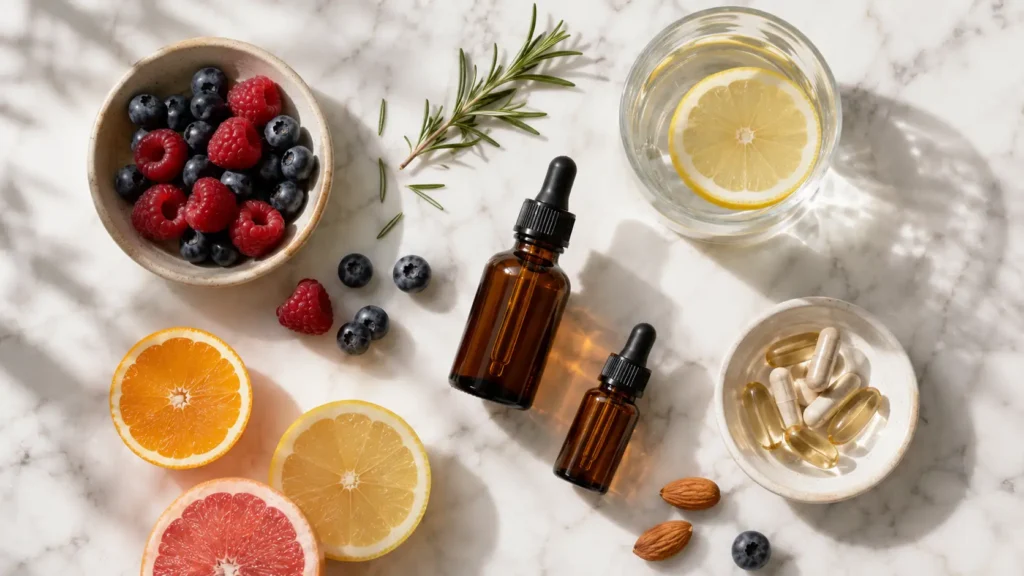
A diet rich in vitamin C, zinc, sulfur-containing amino acids, and antioxidant phytonutrients supports every stage of collagen synthesis and protection. Anti-inflammatory eating patterns — emphasizing colorful vegetables, quality proteins, healthy fats, and low-glycemic carbohydrates — reduce the systemic inflammation that degrades collagen.
In summer, this means prioritizing seasonal fruits and vegetables rich in antioxidants, maintaining adequate protein intake, and being mindful of dehydrating foods and beverages that compromise skin’s moisture balance.
Professional-grade nutritional supplements — recommended under practitioner guidance rather than selected off a store shelf — can meaningfully address specific deficiencies that diet alone may not correct. At Natural Beauty Clinic, supplement recommendations are individualized based on clinical assessment, not generic protocols.
Hormonal Balance
For women experiencing perimenopausal or menopausal changes, naturopathic hormonal assessment can identify shifts in estrogen, progesterone, and other hormones that are directly impacting skin quality. Integrative and naturopathic approaches to hormonal support — which may include botanical medicines, lifestyle modifications, nutritional interventions, and collaboration with other members of the healthcare team — form an important part of the skin health conversation at our clinic.
IV Nutrient Therapy
Intravenous nutrient therapy delivers therapeutic concentrations of vitamins, minerals, and antioxidants directly into the bloodstream, bypassing the limitations of oral absorption. For patients whose nutritional status is compromised by chronic stress, digestive dysfunction, or high physiological demand — all of which are common in busy professionals across Surrey, Langley, and Greater Vancouver — IV therapy can provide a meaningful foundation for cellular repair and collagen support.
Summer protocols can be specifically formulated to address UV-related oxidative stress, support immune function, optimize hydration, and provide the raw materials the skin needs to repair and regenerate.
Ozone Therapy
Medical ozone therapy works by modulating oxidative balance, supporting circulation, and enhancing the body’s antioxidant defenses. From an integrative medicine perspective, ozone therapy can contribute to the overall cellular environment that supports healthy skin — reducing the oxidative burden that accelerates collagen degradation and compromising fibroblast function.
7. The Five Foundations of Skin Health at Natural Beauty Clinic
Dr. Capera’s integrative approach to skin health rests on five interconnected foundations. True regeneration — the kind that produces lasting, visible results — requires attention to all five.
1. Detoxification Support The body’s ability to eliminate toxins through the liver, lymphatic system, gut, and skin directly impacts inflammation levels and cellular health. Supporting detoxification pathways reduces the inflammatory burden that degrades collagen and impairs skin function.
2. Correcting Nutritional Deficiencies Targeted nutritional assessment identifies and addresses deficiencies in the specific vitamins, minerals, and amino acids required for collagen synthesis, skin barrier function, and cellular repair.
3. Hormonal Balance Hormonal assessment and naturopathic support help restore the hormonal environment that promotes fibroblast activity, skin hydration, and collagen density — particularly important for women in their forties and fifties.
4. Mitochondrial and Organ Support Mitochondria are the energy-producing organelles in every cell. When mitochondrial function is compromised — by aging, nutrient deficiency, toxin exposure, or chronic illness — cellular repair capacity is impaired. Supporting mitochondrial health supports every process of skin regeneration.
5. Inflammation Modulation Identifying and addressing the sources of chronic low-grade inflammation — whether dietary, environmental, hormonal, or stress-related — reduces the single greatest accelerant of collagen degradation and visible skin aging.
8. Skin Boosters vs. Dermal Fillers: Understanding the Difference
One of the most common points of confusion among patients seeking aesthetic consultations is the difference between skin boosters and dermal fillers. Both involve injectable hyaluronic acid, but they serve fundamentally different purposes.
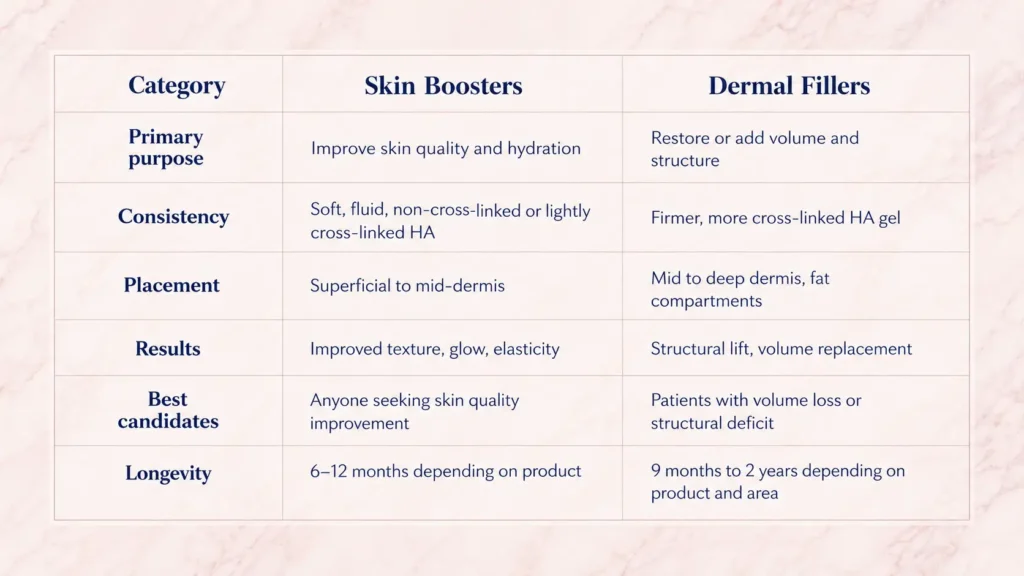
The current trend in aesthetic medicine — and the philosophy that guides Natural Beauty Clinic — favors skin quality and biostimulation over structural volumization alone. Many patients who previously sought fillers are now finding that addressing skin quality first, with boosters, exosomes, and regenerative treatments, achieves more natural and satisfying results.
9. When to Seek Professional Guidance
Not all changes in skin quality require intervention, and not every aesthetic treatment is appropriate for every person. However, the following situations warrant a consultation with a qualified practitioner:
- Noticeable loss of skin firmness or elasticity, particularly along the lower face and neck
- Persistent skin dullness, uneven texture, or enlarged pores that do not respond to skincare
- Rapid or significant pigmentation changes, including melasma or post-inflammatory hyperpigmentation
- Hair thinning that may reflect nutritional, hormonal, or inflammatory factors
- Skin changes associated with perimenopause, menopause, or other hormonal transitions
- A desire for personalized, evidence-informed guidance rather than generic product recommendations
A skilled integrative practitioner will assess not only the skin but the broader clinical picture — exploring hormonal status, nutritional patterns, inflammatory markers, and lifestyle factors that may be contributing to visible skin changes.
FAQ’S
Collagen production begins to slow in the mid-twenties and declines by approximately 1% per year from around age 25–30. The visible effects often become apparent in the thirties and accelerate during perimenopause and menopause.
Yes, collagen production can be meaningfully supported through a combination of evidence-informed aesthetic treatments (such as microneedling, RF microneedling, skin boosters, and PRP) and internal strategies (including targeted nutrition, hormonal support, and anti-inflammatory lifestyle practices). No single product or treatment works in isolation, and results depend on individualized assessment.
Skin boosters are injectable hyaluronic acid preparations formulated for deep hydration and skin quality improvement rather than volumization. They integrate into the dermis, attract moisture, stimulate fibroblasts, and improve skin texture and luminosity. Unlike traditional fillers, they do not add structural volume or change facial contours.
Exosomes are nano-sized extracellular vesicles that carry growth factors and signaling molecules between cells. When used therapeutically, high-quality exosome preparations can support cellular repair and collagen stimulation. Research is ongoing, and quality and sourcing vary significantly between products. At Natural Beauty Clinic, treatments are selected based on evidence quality and practitioner training.
Summer increases UV exposure, which activates enzymes (matrix metalloproteinases) that actively break down collagen and elastin. Heat, dehydration, increased outdoor activity without sun protection, and dietary changes during summer can compound this effect. Proactive skin protection and regenerative strategies are particularly valuable during summer months.
Yes. Oral collagen supplements provide amino acid building blocks but their direct contribution to skin collagen has variable evidence. Aesthetic treatments that stimulate the skin’s own fibroblasts to produce collagen — such as microneedling, RF microneedling, skin boosters, and laser — are generally more directly efficacious for skin structure. The two approaches are not mutually exclusive and may be complementary under practitioner guidance.
Hormones — particularly estrogen — play a significant role in fibroblast activity, skin hydration, barrier function, and collagen density. The skin changes many women notice during perimenopause and menopause reflect, in large part, the declining influence of estrogen on skin biology. Naturopathic hormonal assessment and integrative support can be an important part of a comprehensive skin health strategy.
Most adults who are concerned about skin quality, collagen loss, skin laxity, texture, or early signs of aging are potential candidates for regenerative aesthetic treatments. A thorough consultation is essential to identify the most appropriate protocols based on individual skin concerns, health history, and personal goals.
This varies significantly depending on the treatment, the patient’s baseline skin condition, and their goals. Many regenerative protocols involve an initial series of treatments followed by maintenance sessions. A realistic consultation will outline expected timelines and realistic outcomes rather than overpromising rapid transformation.
Yes, and combination approaches are often more effective than any single treatment. For example, combining microneedling with exosomes enhances the delivery and efficacy of both. Pairing aesthetic treatments with internal strategies — nutrition, hormonal support, IV therapy — addresses the problem from multiple angles simultaneously.
Absolutely. While this article primarily addresses women — who make up the majority of aesthetic medicine patients — men experience collagen loss on essentially the same biological timeline. The integrative approach to skin health described here is fully applicable to male patients as well.
Dr. Capera’s integrative and functional medicine training means that skin health consultations at Natural Beauty Clinic go beyond what treatments to perform and explore why skin changes are occurring. This allows for more targeted, personalized, and effective strategies — and a deeper patient-practitioner relationship built on education, trust, and long-term wellness.
Ready to Take the Next Step?
Personalized Skin Rejuvenation Starts With Understanding Your Skin
If you are in White Rock, South Surrey, Surrey, Delta, Langley, Richmond, Vancouver, or anywhere in the Greater Vancouver area, we warmly invite you to schedule a consultation at Natural Beauty Clinic.
Dr. Belinda Capera and the Natural Beauty Clinic team will take the time to understand your skin concerns, your health history, and your personal goals — and create a personalized plan that addresses both the aesthetic and the integrative foundations of lasting skin health.
This is not a one-size-fits-all approach. It is medicine that sees you as a whole person.
Book your consultation today:

Natural Beauty Clinic | White Rock, BC | Integrative Medicine | Regenerative Aesthetics | Healthy Aging
This article is intended for educational purposes and does not constitute medical advice. Individual results vary.