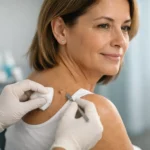
A lingering tendon injury, stiffness that changes how you move, or a joint that no longer recovers as it once did can affect far more than an exercise routine. Regenerative medicine is an evolving area of care that aims to support the body’s natural repair processes while helping patients pursue more comfortable movement, functional resilience, and healthy aging.
At Natural Beauty Clinic, we approach regenerative care as part of a broader, physician-led wellness plan. That means looking beyond one painful area to consider the factors that can influence recovery and tissue health, including activity demands, prior injuries, inflammation, nutrition, sleep, hormonal changes, and relevant medical history. The goal is not a quick fix. It is a thoughtful plan built around your health, your concerns, and realistic expectations.
What Is Regenerative Medicine?
Regenerative medicine is a broad term for treatments and research focused on supporting the repair, restoration, or replacement of damaged tissues. In clinical practice, the term often refers to procedures that use the body’s own biological materials or carefully selected injectables to support the healing response in specific tissues.
The field is advancing quickly, but the phrase can mean different things in different settings. Some regenerative approaches are well established for particular musculoskeletal applications, while others remain investigational, have mixed evidence, or may not be appropriate for every patient. A responsible recommendation starts with defining the problem clearly and discussing what the available evidence can, and cannot, tell us.
For patients interested in active aging, regenerative medicine may be considered when discomfort, repetitive strain, early degenerative changes, or a past injury is interfering with mobility and quality of life. It is not a substitute for appropriate medical diagnosis, rehabilitation, strength training, or surgery when surgery is medically indicated. In many cases, it works best as one component of a complete plan.
The Regenerative Medicine Treatments We May Consider
Your treatment pathway depends on the tissue involved, the nature and duration of symptoms, imaging or assessments when appropriate, your general health, and your goals. At our White Rock clinic, regenerative treatment options may include prolotherapy and platelet-based therapies such as PRP or PRF, when clinically suitable.
Prolotherapy
Prolotherapy is an injection-based treatment that uses an irritant solution, commonly dextrose, to initiate a localized inflammatory response. The intent is to stimulate the body’s natural healing activity in targeted connective tissues, such as ligaments or tendons.
It may be considered for certain chronic musculoskeletal concerns, particularly where tendon or ligament support is a clinical focus. Research is still developing, and outcomes can vary based on the condition being treated, the precision of the treatment plan, rehabilitation, and individual biology. Some patients require a series of sessions rather than a single treatment.
Platelet-Rich Plasma and Platelet-Rich Fibrin
PRP and PRF are prepared from a small sample of your own blood. After processing, the platelet-rich portion is used in a targeted procedure. Platelets contain signaling proteins involved in normal tissue repair, and these treatments are intended to support the body’s healing response.
PRP and PRF are used in both wellness and aesthetic care, but the goals and treatment techniques differ. In musculoskeletal applications, they may be considered for select tendon, ligament, or joint-related concerns. In aesthetic medicine, platelet-based treatments may support skin quality, collagen stimulation, scalp health, or recovery when integrated with other clinically appropriate modalities.
The evidence for PRP varies considerably by indication. It may be more promising for some conditions than others, and different preparation methods can affect the final product. We believe patients deserve clarity about those distinctions rather than broad promises.
Aesthetic Regeneration and Skin Quality
Regenerative principles also have a place in aesthetic medicine, where the emphasis is often on supporting collagen, elastin, hydration, and overall skin quality. Treatments such as PRP, PRF, Sculptra, microneedling, radiofrequency microneedling, and CO2 laser resurfacing may be selected to encourage gradual tissue remodeling and natural-looking rejuvenation.
These treatments are not interchangeable. A patient concerned about fine lines, acne scars, laxity, pigment, or volume loss may benefit from very different strategies. Skin health can also be influenced by sun exposure, hormonal shifts, inflammatory skin conditions, nutrition, and daily skincare. A personalized assessment helps us choose a treatment plan that respects both your facial anatomy and your long-term goals.
Who May Be a Candidate?
Regenerative treatments are not defined by age alone. A highly active person in their 30s with a persistent overuse injury may have different needs than someone in their 60s who wants to maintain mobility while managing early joint changes. The most useful question is whether a treatment is appropriate for the specific condition, tissue, and person in front of us.
A consultation may be worthwhile if symptoms are persistent, activity is becoming limited, or you are seeking a more comprehensive approach after conservative measures have not provided enough improvement. Before recommending care, we review your health history, medications, prior procedures, current symptoms, goals, and any factors that may affect safety or response.
Some people may not be suitable candidates due to certain medical conditions, active infection, bleeding risks, pregnancy, uncontrolled chronic illness, or other clinical considerations. In other cases, we may recommend further assessment, physical therapy, imaging, or coordination with another healthcare provider before proceeding.
Why an Integrated Plan Matters
A procedure can be only one part of the recovery picture. Tissue healing and healthy aging are influenced by the environment surrounding the tissue itself. Sleep quality, protein intake, nutrient status, blood sugar regulation, training load, stress, smoking status, and hormone health can all matter.
For this reason, an integrative plan may include attention to lifestyle measures, nutritional medicine, functional laboratory interpretation when indicated, targeted supplementation, and appropriate movement or rehabilitation guidance. This is not about adding unnecessary interventions. It is about identifying the practical factors most likely to support your individual goals.
For example, an injection-based treatment for a tendon concern may be paired with a graduated strengthening program and activity modification. A skin-focused regenerative plan may combine an in-office procedure with sun protection, medical-grade skincare, and assessment of contributors such as inflammation or hormonal changes. The right combination depends on the concern and the person.
What to Expect From the Process
Regenerative treatments begin with a detailed conversation and clinical assessment. We discuss what is bothering you, how it affects your daily life, what you have already tried, and what outcome would feel meaningful. From there, we can explain whether a regenerative approach may fit your care plan, the alternatives available, and the expected recovery process.
Many treatments involve some degree of temporary tenderness, swelling, bruising, or soreness. Downtime varies by procedure and treatment area. You may need to modify strenuous activity for a period of time, particularly after musculoskeletal injections. Aesthetic procedures can have their own recovery timelines, ranging from mild redness to several days of visible healing depending on the modality.
Results are rarely immediate because these approaches are designed to work with biological processes that take time. Some patients notice gradual changes over weeks or months, while others may experience limited improvement. We will discuss the likely treatment timeline, potential risks, aftercare, and signs that should prompt follow-up before you decide whether to proceed.
Choosing Care With Confidence
The language around regenerative medicine can sometimes make it sound more certain than the science allows. A high-quality treatment plan should make room for both possibility and uncertainty. It should explain why a particular option may be appropriate, what other approaches should be considered, and how progress will be evaluated.
For patients from White Rock, South Surrey, the Fraser Valley, and nearby Washington communities, the value of physician-led integrative care is having one thoughtful conversation about the connection between function, vitality, and appearance. Healthy aging is personal. The most meaningful next step is an assessment that gives you clear information, realistic options, and a plan designed around the life you want to keep living.