
Home | Naturopathic Services | Narrowband UVB Phototherapy

Medical Phototherapy for Skin Health
At Natural Beauty Clinic in White Rock, BC, we offer Narrowband UVB (NB-UVB)
Phototherapy — an evidence-informed medical light therapy used in dermatology for
selected inflammatory, pigmentary, pruritic and photoresponsive skin conditions.
NB-UVB delivers a controlled spectrum of ultraviolet B light centred around 311–313 nm.
This targeted wavelength interacts with immune and inflammatory pathways in the skin, influences keratinocyte and melanocyte activity, and supports the skin’s natural vitamin D production pathway.
We combine medical phototherapy with the broader lens of naturopathic medicine —
addressing the skin directly while evaluating nutritional status, inflammation, hormonal and metabolic health, and gastrointestinal function.
Treat the skin. Understand the person. Support health from within.
What Is Narrowband UVB Phototherapy?
Narrowband UVB Phototherapy is a non-invasive treatment that exposes affected skin to a carefully controlled therapeutic range of ultraviolet B radiation.
Unlike general sun exposure or commercial tanning, NB-UVB concentrates treatment within the narrow UVB spectrum used medically in dermatology.
At Natural Beauty Clinic, treatments are delivered using a professional full-body medical Narrowband UVB system, allowing efficient treatment of larger or multiple areas while maintaining precise control over exposure.
Treatment parameters are individualized to:
- Skin phototype.
- Diagnosis.
- Location and extent of affected skin.
- Previous UV exposure.
- Medications and supplements.
- Photosensitivity.
- Previous treatment history.
- Individual response to therapy.
Treatment begins with controlled exposure and is progressively adjusted based on thetreatment protocol and skin response.
How Does Narrowband UVB Work?
NB-UVB produces several biological effects that explain its use across different dermatologic conditions.
Immunomodulatory effects — Controlled UVB exposure regulates immune activity and inflammatory pathways involved in selected chronic inflammatory dermatoses.
Regulation of skin-cell turnover — NB-UVB influences keratinocyte activity, making it especially relevant for conditions involving abnormal epidermal proliferation, such as psoriasis.
Pigmentation pathways — NB-UVB stimulates melanocyte activity, forming the basis for its use in vitiligo.
Antipruritic effects — Phototherapy influences pathways involved in chronic itching and is used in selected pruritic skin disorders.
Vitamin D production — UVB radiation initiates the natural cutaneous pathway responsible for vitamin D synthesis.
Clinical Applications of Narrowband UVB Phototherapy
Psoriasis
NB-UVB is an established phototherapy modality for plaque psoriasis and selected other forms of psoriasis. It modulates cutaneous immune activity and regulates excessive keratinocyte proliferation, progressively improving psoriatic plaques over a course of treatment.
Vitiligo
NB-UVB is one of the principal phototherapy modalities used for vitiligo. Repeated
controlled exposure stimulates melanocyte activity and supports progressive repigmentation. Results vary by lesion location, extent, and duration and stability of the condition.
Chronic Pruritus & Prurigo
NB-UVB’s antipruritic and immunomodulatory effects make it useful in selected cases of chronic pruritus and prurigo, including prurigo nodularis. Persistent or unexplained itching also warrants investigation for underlying dermatologic or systemic contributors.
Lichen Planus
NB-UVB can be used in selected patients with generalized or extensive cutaneous lichen planus, particularly when larger areas of skin are involved.
Selected Photodermatoses
Controlled phototherapy can be used as photohardening in selected photosensitivity
disorders, progressively increasing the skin’s UV tolerance — one application being polymorphic light eruption, depending on presentation.
Other Dermatologic Applications
NB-UVB has an established role in appropriately diagnosed early-stage mycosis fungoides, a form of cutaneous T-cell lymphoma. Patients with suspected or confirmed cutaneous malignancy require specialist assessment and coordinated medical management.
Narrowband UVB & Vitamin D
Vitamin D has an important physiological relationship with ultraviolet B radiation. When UVB reaches the skin, it converts 7-dehydrocholesterol into previtamin D3, which is then converted to vitamin D3 and enters the body’s vitamin D metabolic pathway.
Research on patients undergoing NB-UVB phototherapy has shown increases in serum 25- hydroxyvitamin D [25(OH)D] during treatment courses.
At Natural Beauty Clinic, vitamin D status is evaluated through serum 25(OH)D testing as part of our comprehensive naturopathic assessment. For patients with deficiency or insufficiency, we build an individualized strategy incorporating lab assessment, nutrition, supplementation, monitoring, and evaluation of related nutritional and metabolic factors.
Phototherapy and oral vitamin D supplementation are different interventions — our goal is to understand vitamin D status within your complete health picture and build a personalized strategy around it.
What to Expect During Phototherapy
Before beginning treatment, we complete a comprehensive assessment covering skin
condition and distribution, medical history, current medications and supplements, previous dermatologic treatments and UV exposure, sun sensitivity, and relevant personal and family history. Medication and supplement review matters — certain substances increase UV sensitivity.
During treatment, affected skin is exposed to NB-UVB for a precisely controlled period.
Protective eyewear is required. Initial sessions are brief, with exposure progressively
adjusted based on skin phototype, protocol, and individual response. Treatment is generally painless and requires no anesthesia.
How Many Sessions Will I Need?
NB-UVB works progressively and is administered as a series rather than a single treatment.
Established protocols commonly involve multiple sessions per week during the initial phase.
Frequency and total number of sessions depend on:
- Condition being treated.
- Severity and extent.
- Skin phototype.
- Previous treatment history.
- Individual skin response.
- Treatment consistency.
Progress is monitored throughout the series and exposure adjusted accordingly.
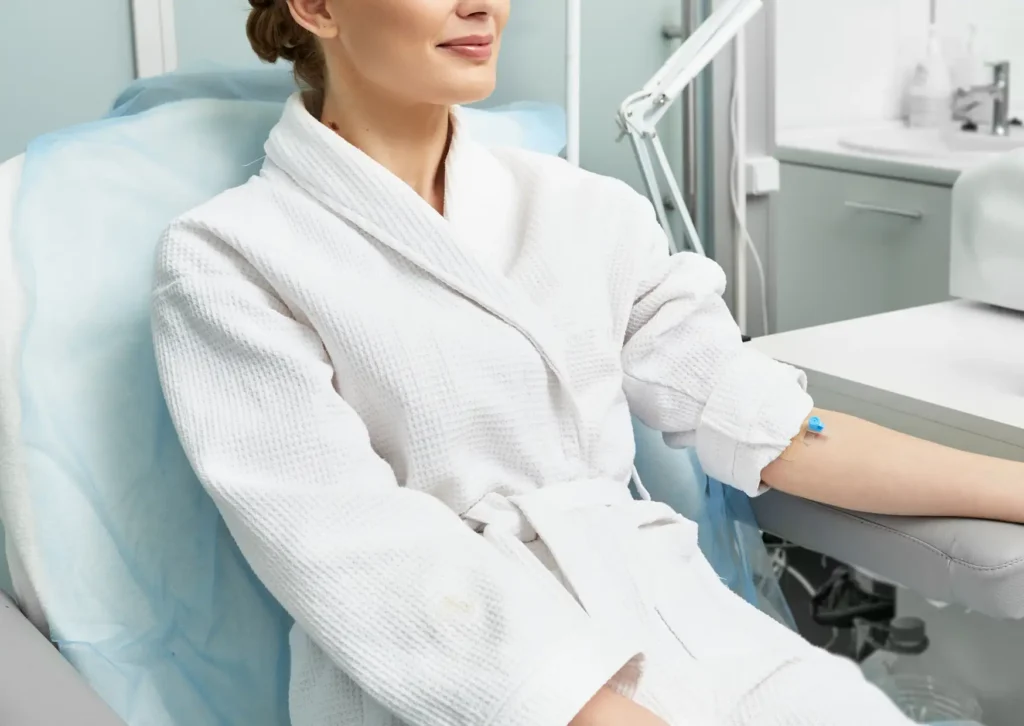
Beyond Phototherapy: Our Integrative Approach to Skin Health
Skin health is more than skin deep. Phototherapy addresses the skin directly, while naturopathic medicine lets us examine the broader biological environment the skin functions within — guided by the Five Naturopathic Pillars of Natural Beauty Clinic.
1. Detoxification Support — We evaluate and support the body’s elimination systems:
gastrointestinal and hepatic function, hydration, bowel regularity, nutrition, lifestyle and environmental exposures, using nutritional and botanical support, antioxidants, movement, and infrared sauna.
2. Correcting Nutritional Deficiencies — Nutritional status shapes skin-barrier function, pigmentation, cellular metabolism, antioxidant defence and immune function. We assess vitamin D, B12, folate, iron/ferritin, zinc, copper, selenium, magnesium and essential fatty acids, plus CBC, iron studies, thyroid markers and glucose/metabolic markers — then correct deficiencies with nutrition and professional supplementation.
3. Hormonal Balance — Hormonal and metabolic physiology affects skin function, pigmentation, inflammation and wellbeing. We assess TSH/Free T4/Free T3, estrogen, progesterone, testosterone, DHEA-S, cortisol, fasting glucose, HbA1c and insulin, interpreted alongside symptoms and life stage.
4. Supporting Organs & Mitochondria — Healthy skin depends on healthy cellular and systemic function: gut health, thyroid and endocrine function, metabolic health, blood glucose regulation, oxidative balance, sleep and cellular energy production.
5. Modulating Inflammation — Chronic skin conditions are driven by inflammatory and
immune pathways. We address diet, gut health, metabolic function, stress, sleep,
environmental exposures and nutritional status with omega-3s, vitamin D, antioxidants, botanical medicine and targeted supplementation.
Integrative Therapies at Natural Beauty Clinic
- IV Nutrient Therapy — vitamin C, B-complex, magnesium, glutathione, amino acids and other individualized formulations to support nutrient status, antioxidant capacity and cellular metabolism.
- Ozone Therapy — controlled medical oxygen-ozone protocols supporting oxidative balance, circulation and cellular physiology. At Natural Beauty Clinic, ozone therapy is offered in several individualized forms:
- Major Autohemotherapy — a sample of the patient’s blood is drawn, ozonated, and reinfused. This can be administered as a single session or as a progressive series (commonly referred to as 1 pass, 5 passes, or 10 passes), with the number of passes determined by the patient’s condition, treatment goals and individual response.
- Minor Autohemotherapy — a smaller volume of blood is drawn, ozonated and combined with ozone gas before intramuscular reinfusion, generally used as a gentler or introductory approach to ozone therapy.
- G6PD screening is required before any autohemotherapy protocol (major or minor).
- Biopuncture & Homeopathic Medicine — targeted homeopathic preparations at specific anatomical or therapeutic points, alongside individualized homeopathic strategies.
- Infrared Sauna Therapy — supporting relaxation, circulation and the body’s normal elimination processes.
- Targeted Nutritional & Botanical Support — vitamins, minerals, omega-3s, antioxidants, probiotics, gastrointestinal support and botanical medicine.
Phototherapy + Naturopathic Medicine
Treating the skin from the outside. Supporting health from within.
From the outside: Narrowband UVB Phototherapy delivers controlled therapeutic UVB directly to affected skin.
From within: Naturopathic medicine evaluates nutritional status, vitamin D, inflammation, hormones, thyroid and metabolic health, gut function, mitochondrial support and lifestyle.
A personalized plan can combine NB-UVB Phototherapy, comprehensive naturopathic assessment, laboratory testing, vitamin D and nutritional assessment, hormonal and thyroid evaluation, targeted supplementation, IV nutrient therapy, ozone therapy, biopuncture, homeopathic medicine, infrared sauna and nutrition/lifestyle medicine.
One patient. One comprehensive strategy.
Narrowband UVB vs. Tanning Beds
Medical Narrowband UVB Phototherapy is not commercial tanning. NB-UVB concentrates treatment within a specific therapeutic UVB spectrum with carefully controlled exposure. Commercial tanning equipment is designed to produce a tan and is not a substitute for medical phototherapy.
Narrowband UVB vs. Red Light Therapy
These are different technologies. NB-UVB uses ultraviolet light around 311–313 nm with established dermatologic applications. Red and near-infrared photobiomodulation use longer wavelengths and work through different biological mechanisms.
Safety & Medical Considerations
NB-UVB has an established role in dermatologic care, but it remains ultraviolet radiation and requires controlled treatment parameters. Temporary reactions can include mild redness, dryness, itching, temporary pigmentation changes, increased sensitivity, or a sunburn-like reaction following excessive exposure.
We review photosensitivity, medications, supplements, previous UV exposure and relevant medical and skin history before establishing your treatment protocol. Protective eyewear is required during UV exposure, and treatment parameters are monitored throughout the series.
Frequently Asked Questions (FAQs)
Treatment is generally painless. Some patients notice temporary warmth, dryness or mild redness afterward.
Yes. NB-UVB is an established phototherapy modality for psoriasis management, with improvement developing progressively over a series of treatments.
Yes. NB-UVB is one of the principal phototherapy modalities used for vitiligo. Response varies by location, extent, duration and stability of the condition.
NB-UVB can be incorporated into managing persistent or more extensive eczema and atopic dermatitis.
UVB radiation participates in natural cutaneous vitamin D production, and studies have shown increases in serum 25- hydroxyvitamin D [25(OH)D] during NB-UVB courses. Vitamin D status can also be measured and built into an individualized nutritional strategy.
No. Medical NB-UVB uses a controlled therapeutic ultraviolet spectrum and is fundamentally different from commercial tanning.
Yes. Phototherapy integrates with laboratory assessment, nutrition, supplementation and other naturopathic therapies for a comprehensive strategy.
Yes. We want to understand what we’re treating before we treat it. Your consultation evaluates your skin condition, medical history, medications and overall health to establish an individualized treatment strategy.