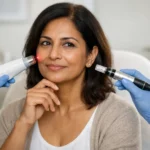
A patient may come in focused on acne scars, sun spots, fine lines, or a general loss of firmness – then discover that the best answer is not simply choosing the stronger treatment. In the conversation around laser versus microneedling, the right option depends on the concern being treated, your skin tone and sensitivity, your tolerance for downtime, and how your skin has responded to previous procedures.
Both treatments can support collagen remodeling and improve skin quality, but they work through different mechanisms. A thoughtful assessment helps us match the technology to your skin rather than fitting your skin to a trend.
Laser versus microneedling: the core difference
Laser treatments use concentrated light energy to target specific structures within the skin. Depending on the device and treatment settings, laser energy may address pigment, visible signs of sun damage, uneven texture, fine lines, laxity, or deeper resurfacing needs. Some lasers focus primarily on pigment or redness, while ablative resurfacing lasers remove controlled columns or layers of skin to encourage more significant renewal.
Microneedling uses very fine, sterile needles to create controlled microchannels in the skin. This process activates the body’s wound-healing response and may stimulate collagen and elastin production over time. Traditional microneedling, such as Dermapen DP4, primarily creates mechanical micro-injuries. RF microneedling, including Morpheus8, pairs those microchannels with radiofrequency energy delivered at selected depths, adding heat-based collagen remodeling.
The distinction matters because laser is not one single treatment, and neither is microneedling. A gentle pigment-focused laser session is very different from CO2 laser resurfacing, just as superficial microneedling differs from a deeper RF microneedling protocol. The meaningful comparison is usually between a specific technology and a clearly defined skin goal.
When laser treatment may be the better fit
Laser treatment can be especially useful when pigment, photodamage, or more substantial texture changes are the primary concern. IPL photorejuvenation, while technically intense pulsed light rather than a laser, may be considered for certain concerns involving visible sun damage, freckles, and uneven tone. A consultation is essential, particularly for melasma, because heat and light can worsen pigmentation in some individuals if treatment selection is not carefully managed.
Fractional CO2 resurfacing, such as HELIX CO2 laser resurfacing, is often considered when someone is seeking more intensive support for textural concerns. This may include etched fine lines, certain acne scars, roughness, and more pronounced signs of photoaging. Because ablative CO2 treatments create a more significant controlled skin injury, they generally involve more visible recovery than standard microneedling.
Laser may also be preferred when the target is highly specific. For example, light-based technology can selectively address particular pigment patterns in a way conventional microneedling cannot. It can also offer a more comprehensive resurfacing effect for an appropriate candidate who is prepared for the recovery process.
That does not automatically mean laser is “better.” Higher-intensity resurfacing can mean more redness, peeling, strict aftercare, and a longer social downtime. Skin tone, history of post-inflammatory hyperpigmentation, active inflammatory skin conditions, medications, and the time of year can all influence whether a laser protocol is suitable.
What recovery after laser can look like
Downtime varies widely by treatment. Some light-based procedures leave the skin mildly pink or temporarily darken superficial pigment before it flakes away. More intensive CO2 resurfacing may involve several days of notable redness, swelling, warmth, and peeling, followed by a longer period of residual pinkness as the skin continues to recover.
Aftercare is not an optional detail. Daily broad-spectrum sunscreen, gentle skincare, avoiding heat exposure and friction, and following the clinical plan closely help support healing. For patients with an upcoming event, we often discuss timing well in advance rather than treating close to an important date.
When microneedling may be the better fit
Microneedling is often selected for patients who want gradual collagen support with less downtime than an ablative laser procedure. It may help improve the appearance of early fine lines, enlarged pores, mild textural irregularities, and some types of acne scarring. It can also be incorporated into a long-term skin-quality plan for patients focused on prevention and healthy aging.
Standard microneedling can be appealing for individuals who prefer a treatment with a shorter visible recovery period. Skin commonly appears pink or flushed after treatment, similar to a sunburn, and this often settles over the following days. The skin may feel dry, tight, or slightly rough as it recovers.
RF microneedling adds another layer of customization. By delivering radiofrequency energy beneath the skin surface, Morpheus8 may support collagen remodeling at depths that can be adjusted based on the treatment area and goals. It is often considered for concerns involving texture, early laxity, acne scarring, or crepey skin in selected areas of the face and body.
Microneedling is not completely downtime-free, nor is it appropriate for every concern. It will not target discrete sun spots in the same way a pigment-focused light treatment can. Results also tend to build progressively, often through a series of treatments and ongoing collagen remodeling over several months.
Microneedling and skin tone considerations
One reason microneedling is often discussed for a broad range of skin tones is that the treatment does not rely on pigment-targeting light energy in the way many laser procedures do. However, that does not remove the need for individualized screening. A history of keloid scarring, active acne lesions, skin infection, certain medical conditions, or a tendency toward prolonged pigmentation changes may affect suitability.
The treatment plan should also consider active rosacea, melasma, inflammation, and barrier impairment. Healthy skin outcomes are supported not only by the procedure itself but by appropriate preparation, aftercare, skincare, sun protection, and attention to internal factors that may influence healing and inflammation.
Comparing results, comfort, and treatment schedules
Laser resurfacing can create more dramatic visible change in certain textural concerns, especially when a more intensive ablative approach is clinically appropriate. In exchange, it typically requires greater downtime and a more structured recovery plan. Microneedling generally offers a more gradual approach, which can be ideal for patients who value subtle improvement and minimal interruption to work, family, or travel schedules.
Comfort is also individualized. Both laser and microneedling treatments may involve topical anesthetic and other comfort measures when appropriate. Patients can experience warmth, prickling, pressure, or a sunburn-like sensation depending on the treatment. We discuss what to expect before treatment so there are no surprises about recovery or post-treatment care.
Neither option should be judged by a single session alone. Collagen takes time to remodel. Some patients benefit from a series of microneedling sessions, while others may choose one carefully planned resurfacing procedure followed by maintenance treatments. Your plan may also include medical-grade skincare, skin boosters, PRP or PRF when clinically appropriate, and lifestyle measures that support skin health.
Can laser and microneedling be combined?
For some patients, yes – but usually as part of a staged plan rather than a matter of doing everything at once. A clinician may recommend treating pigment first with a suitable light-based modality, then addressing residual texture or scarring with microneedling. Others may benefit from laser resurfacing at a particular point in their skin-aging plan and use microneedling later for maintenance.
Combining treatments requires careful timing. Skin needs adequate time to recover between procedures, and more treatment is not necessarily better treatment. The priority is a measured plan that respects your skin barrier, pigment risk, healing capacity, and desired level of downtime.
Choosing a treatment with a physician-led assessment
The most useful question is not, “Which treatment is stronger?” It is, “What is driving my concern, and which approach is appropriate for my skin?” Pigment, vascular redness, acne scars, laxity, active inflammation, hormonal changes, and sun exposure can look similar in a mirror while requiring very different treatment pathways.
At Natural Beauty Clinic in White Rock, we consider facial anatomy, skin quality, medical history, lifestyle, and the factors that can influence healthy aging, including nutrition, inflammation, hormonal balance, and recovery capacity. This integrative perspective helps guide aesthetic care toward natural-looking, sustainable results rather than a one-size-fits-all procedure.
A well-chosen treatment should feel aligned with your goals, your schedule, and your comfort with recovery. The most refined result often comes from thoughtful timing, consistent skin care, and a plan built around the skin you have – and the confidence you want to carry forward.